
Video & Image Processing for Racket Sports
Bringing Pro-Level Match Intelligence to Every Court
Video & Image Processing for Racket Sports
Amateur padel players’ time to shine
As one of the fastest-growing racket sports globally, padel has garnered a large base of clubs, competitive players and coaches. But for all the growth happening on the court, the tools available to actually understand what’s happening during a match haven’t kept up. Professional teams have access to multi-camera rigs, embedded sensors, and dedicated analysts who break down every point. Everyone else has a fixed camera in the corner of the court and a memory that fades by the time they get home.
Moreover, at the peripheries of the court, coaches struggle to measure how much ground a player covered, quantify shot selection, and they have no consistent way to say with confidence who actually won a given point and why. The alternative, manually reviewing footage, is brutal: a 45-minute match takes two to three hours to annotate by hand, and what one analyst sees often doesn’t match what another analyst sees.
If there’s anything VF likes to do, it’s taking on a good challenge. In an internally initiated project, conceived and championed by Virtual Force’s COO, an analytics platform for gathering insights on padel matches was concocted, leaving behind the time-consuming logistical bottlenecks that come with traditional sport analytics tools.
Turning raw footage into structured insight: how it actually works
The honest answer to “how does this work” is that it doesn’t rely on one clever trick. It’s five different AI models working in sequence, each one handing off to the next, turning an unstructured video into a structured understanding of the entire match.
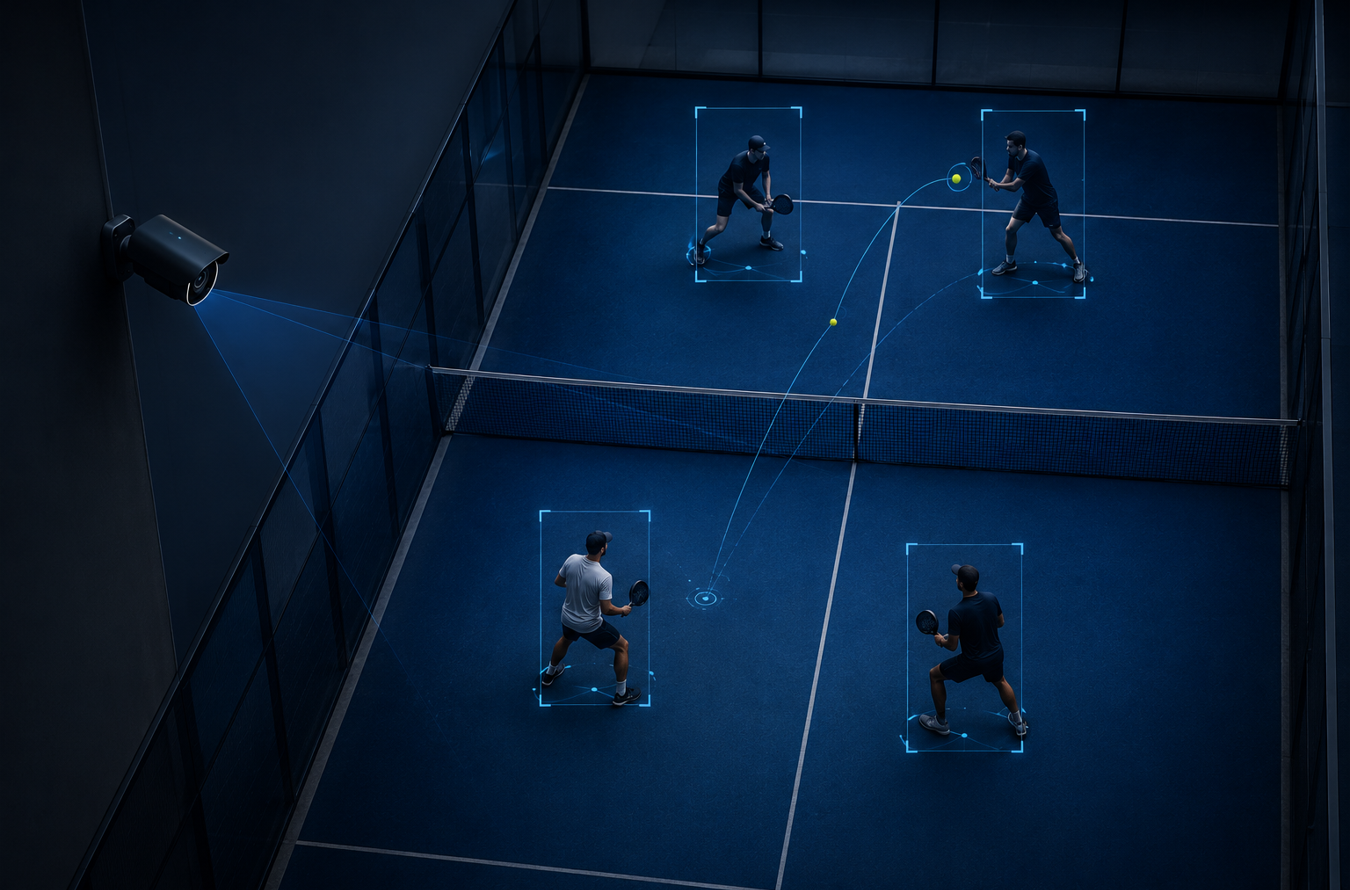
It starts with finding the players. A detection model locates all four players in every frame and tracks them consistently throughout the match, even when they cross paths or briefly leave the frame. From there, the system identifies what counts as play: a serve, a rally, a break between points; all of it gets classified automatically, so the platform isn’t wasting time and accuracy on dead air.
Once it knows what a rally looks like, it tracks the ball through it, frame by frame, filling in the gaps on the moments when the ball is hidden behind a player or the glass. At the same time, it’s reading each player’s body position, identifying the exact moment of contact with the ball, and using that to classify the shot itself: a smash, a volley, a lob, a drive.
The final layer takes all of that and translates pixels into the real world. Player speed, distance covered, court positioning, and who actually won each point, all calculated from the geometry of the court itself. And then, on top of the numbers, an AI-generated summary turns all of it into something genuinely readable: plain-English commentary on what happened and why, without needing a single number explained.
Great, the data exists. But what does it actually feel like to use?
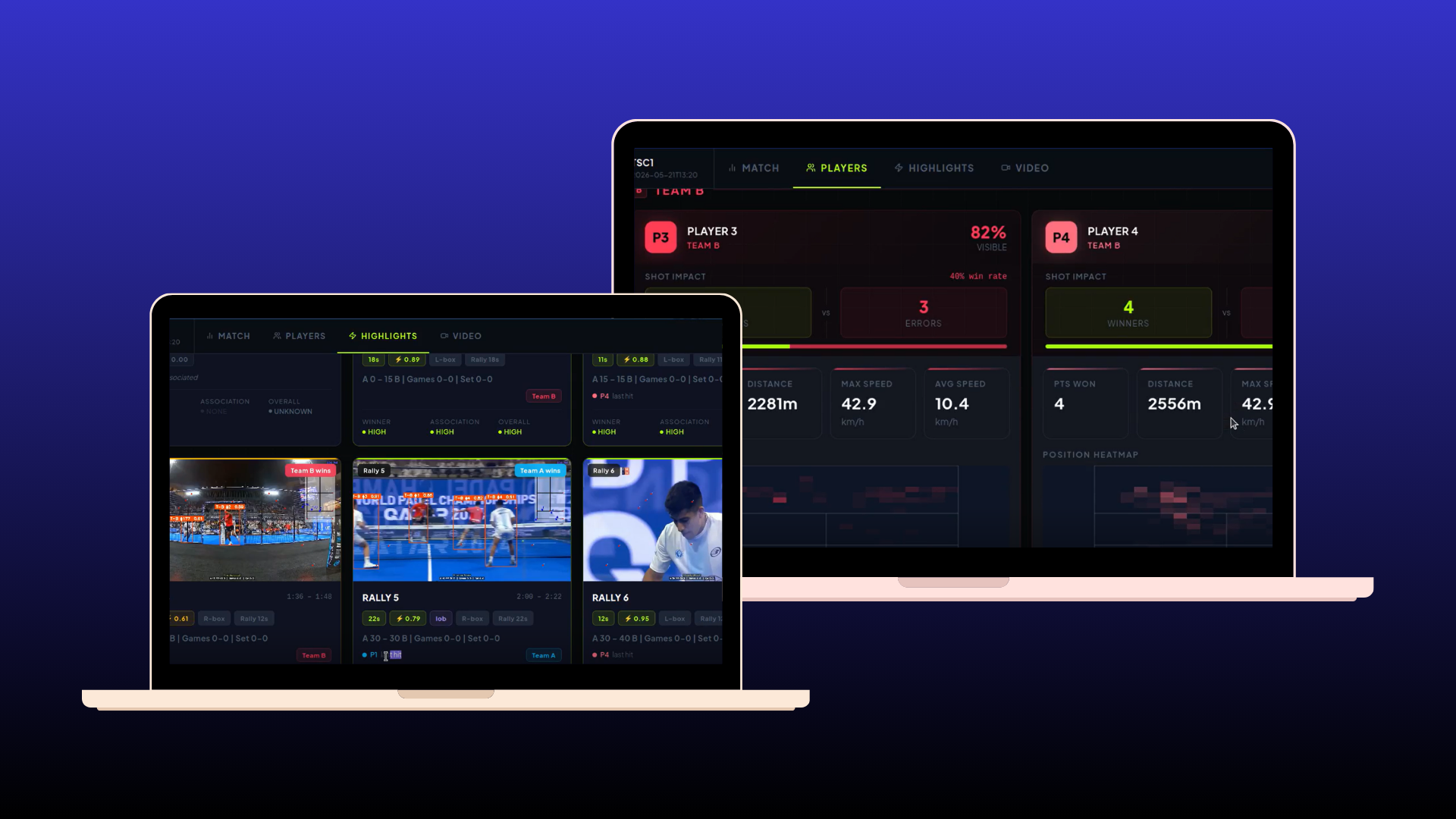
For a coach, the experience starts after the match ends. Upload the recording, calibrate the court once if it’s a new venue, and start the analysis. From there, a full dashboard takes shape on its own: rally-by-rally breakdowns, player heatmaps, shot statistics, and a horizontal timeline that colors each rally by team and by intensity. It sounds simple, but in early internal demos, this was the feature that made everything click. You can look at the timeline and immediately see where the match turned, who dominated which stretch, and click directly into any rally for the full picture.
For a player, the experience is built around a much simpler idea: you played, and now you have something to show for it. Every rally becomes a clip, automatically ranked by how intense it was, with the best moments surfacing first. Clips come in two versions: one with full overlays and shot data for anyone who wants the detail, and a clean version ready to post straight to social media. Alongside the clips, every player gets their own stat card: how far they ran, how fast they moved, and what kinds of shots actually defined their game that day.
A different kind of scoreboard
The idea behind this padel analytics tool is about giving people back the time and insight they didn’t realize they were losing, coaches who were stuck annotating video instead of coaching, and players who were left with nothing but memory where they could have had data and a highlight reel.
Padel and tennis have always generated incredible moments. Our platform just makes sure those moments don’t disappear the second the match ends.